
The health implications of asbestos exposure among workers in industries where this hazardous material is prevalent cannot be overstated, presenting a spectrum of respiratory illnesses that are both severe and often life-threatening. Each breath in an environment laden with asbestos fibers carries a risk that necessitates not only awareness but proactive intervention. From the scarring of lung tissue characteristic of asbestosis to the aggressive malignancies of lung cancer and mesothelioma, understanding these risks sets the stage for a comprehensive evaluation of how we can best support the bodies of those affected in their detoxification efforts. This detailed exploration begins with a sobering look at the health risks associated with asbestos exposure and extends into current protocols and groundbreaking research directed toward detoxification—a quest for resilience against one of the industrial era’s most notorious adversaries.
Asbestos Exposure and Health Risks

Mechanisms of Asbestos Detoxification
Upon inhalation, asbestos fibers can become trapped in the airways and lung tissue, triggering a range of adverse health effects. The human body has innate mechanisms to cope with a variety of foreign materials, including asbestos, although these processes have limitations that can be surpassed by excessive or prolonged exposure.
The primary line of defense against asbestos fibers is the mucociliary escalator—a robust system in which mucus produced by the cells lining the airways traps particles, and tiny hair-like structures called cilia propel the mucus upwards toward the throat, where it can be swallowed or expelled. Nevertheless, the efficiency of the mucociliary escalator can be compromised by the shape and size of asbestos fibers. Specifically, asbestos fibers that are long and thin may bypass this clearance mechanism and penetrate deep into the lung tissue.
Once asbestos fibers have lodged in the lower regions of the respiratory tract, macrophages—phagocytic cells that serve as a key component of the immune system—attempt to engulf and digest them. This cellular ingestion of particles is known as phagocytosis. However, the unique dimensions and durability of asbestos fibers often prevent complete phagocytosis. As a result, macrophages may release reactive oxygen species (ROS) and inflammatory cytokines as they attempt to break down the fibers, inadvertently causing tissue damage and scarring, or fibrosis.
These macrophages also transport some of the asbestos fibers to the lymphatic system, fascinatingly extending the scope of potential harm beyond the immediate site of deposition. Unfortunately, certain fibers can resist breakdown for extensive periods, which may explain the protracted latency periods characteristic of asbestos-related diseases.
Beyond these innate defense mechanisms, the limits of the body’s ability to detoxify from asbestos exposure become apparent when one considers the dose-dependent nature of the associated diseases. Chronic or heavy exposure overwhelms the aforementioned detoxification pathways, while also continuously inducing inflammation and tissue damage. This sustained irritation and damage can lead to the onset of chronic lung conditions, including asbestosis and mesothelioma.
To mimic a detoxification process, alternative interventions, such as therapeutic lavage, have been proposed and occasionally employed in cases of acute high-level exposure. This technique involves washing out the lungs to remove fibers, yet it is invasive and not without risks. Unfortunately, no treatment conclusively accelerates the removal of asbestos fibers once they have settled in lung tissue. Furthermore, in terms of long-term consequences, the irreversible nature of the cellular damage caused by entrapped asbestos fibers remains a sobering reality.
In conclusion, while the human body possesses several mechanisms aimed at mitigating the introduction of asbestos fibers, a perfect detoxification is not currently within reach. Recognizing these limits underscores the necessity of continued research and the importance of preventative measures in occupational settings and during the removal of legacy asbestos from buildings. Despite ongoing advances in medical science, the paramount strategy for reducing the burden of asbestos-related diseases continues to be primary prevention—avoiding exposure in the first place.

Current Detoxification Practices for Asbestos Workers
Ensuring the well-being of asbestos workers necessitates meticulous adherence to a suite of protocols designed to mitigate the inherent health concerns associated with exposure to this fibrous mineral. Contemporary strategies prioritize comprehensive protection and decontamination procedures given that preventive measures outstrip post-exposure treatments in efficacy.
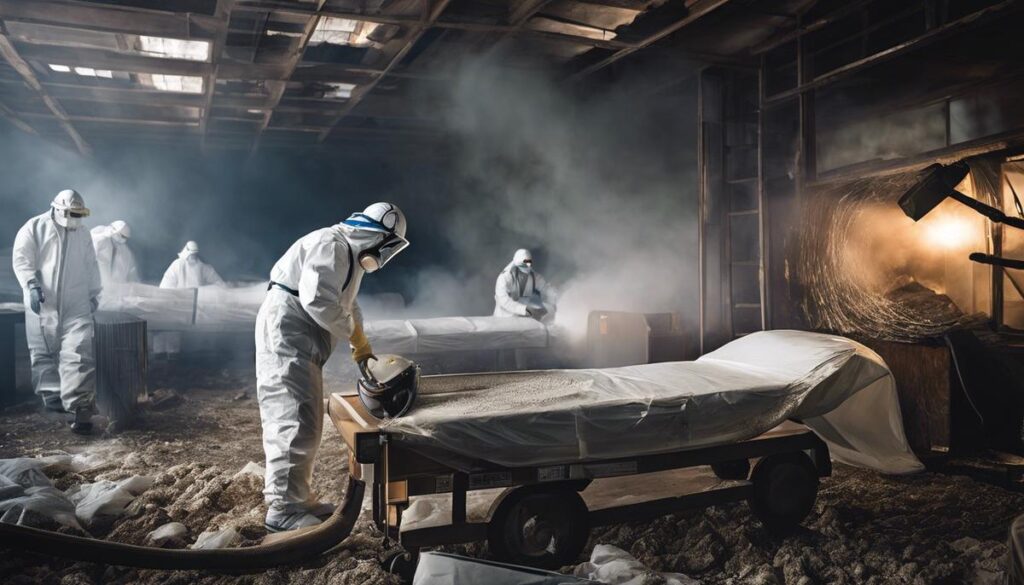
Occupational Safety and Health Administration (OSHA) regulations stipulate stringent workplace practices to minimize asbestos contact. These encompass mandatory use of personal protective equipment (PPE), including respirators and disposable clothing, when engaging with asbestos-containing materials. Such apparel guards against inhalation and ingestion of fibers, and its disposable nature circumvents secondary exposure that could arise from laundering contaminated clothing.
Furthermore, engineering controls, such as local exhaust ventilation systems, are installed at work sites to capture airborne fibers and thereby safeguard the respiratory health of laborers. Enclosure and encapsulation methods are additionally implemented, segregating asbestos or sealing it within a protective barrier to prevent its release into the environment.
Decontamination zones are an integral facet of the work area, structured to curtail the exit of asbestos from affected spaces. These zones house showers that workers must use upon completion of their tasks, facilitating the removal of any lingering fibers from their skin and hair. Adjunct to these zones are clean rooms where workers can change into uncontaminated clothing post-shower, thus preventing the spread of asbestos beyond the immediate vicinity.
Medical surveillance stands as a keystone in the defense against asbestos-related diseases. Regular health assessments, including thorough physical examinations and pulmonary function tests, are ordained for those who toil amid asbestos. Such surveillance is integral, not only for early detection of occupational diseases but also for assessing the effectiveness of implemented safety measures. Workers also receive training regarding the proper procedures for handling asbestos and for self-decontaminating.
In addition to in-place regulations, recent endeavors in research have explored biological methods to mitigate asbestos toxicity, such as through pharmacological agents that may hinder the bioactivity of fibers or promote their expulsion from the body. Nonetheless, these approaches remain experimental and highlight the pressing need for further investigation.
The foremost defense against asbestos-induced pathology is reducing or eradicating exposure altogether. Through the combination of legislative controls, PPE usage, engineering safeguards, stringent decontamination protocols, and enduring medical surveillance, the risk posed to asbestos workers is substantially diminished. Contemporary protocol focuses less on detoxification—owing to the challenges it presents—and more on proactive and preventive measures, aligning with the prevailing consensus that the most effective treatment for asbestos exposure is its prevention.

Innovations in Detoxification Research
Advancements in Asbestos Detoxification: Emerging Techniques and Technologies
In light of the well-documented perils associated with asbestos, significant strides have been made in the field of asbestos detoxification. Current research has shifted beyond mere recognition of asbestos hazards, targeting innovative and effective methods to neutralize and remove these fibers from affected environments and to mitigate their health impacts.
One forefront area of development is the field of biomimetics, which focuses on the design and creation of systems that replicate biological processes. Scientists are exploring the potential of certain enzymes that can break down asbestos fibers. Such enzymes could theoretically be applied to contaminated materials, reducing the fibers to harmless byproducts. Although this is nascent technology, the implications for safe asbestos abatement are promising.
Furthermore, advancements in material science have presented new possibilities in the containment and stabilization of asbestos. Polymer-based barriers, highly effective in sealing asbestos without the need for its removal, have seen increasing application. These barriers are designed to encapsulate the fibers, preventing their release into the air and significantly reducing exposure risk during the handling process.
In addition to these remediation techniques, researchers are studying the genetic and molecular impact of asbestos fibers in cells. Understanding the interaction at this level can lead to breakthroughs in neutralizing the adverse biological effects of asbestos. For instance, gene therapy approaches are being investigated to repair the cellular damage induced by asbestos, or even to enhance the immune response against asbestos-induced carcinogenesis.
The realm of nanotechnology also harbors potential for asbestos detoxification. The use of nanoparticles to either bind to asbestos fibers, rendering them less harmful, or to act as carriers for drug delivery to sites damaged by asbestos, is under rigorous study. These nanoparticles, behaving like ‘smart’ systems, could selectively target asbestos without affecting surrounding healthy tissues.
Asbestos detoxification is not only about treatment but also effective detection and monitoring. Innovations in sensor technology now allow for the real-time detection of airborne asbestos fibers. Portable, highly sensitive devices are capable of monitoring environments for asbestos, thus facilitating the immediate implementation of safety protocols and reducing the time frame for potential exposure.
In tandem with technological advancements, national and global efforts towards legislation strengthen the pursuit of a world free from asbestos-related diseases. Updating permissible exposure limits, enforcing rigorous safety training, and mandating the use of advanced abating techniques are becoming standardized components of occupational health regulation.
In conclusion, the relentless endeavor of the scientific community to develop effective methods of asbestos detoxification exemplifies our commitment to public health and a safer environment. These emerging technologies, in concert with rigorous legislation and education, herald a future where the historical burden of asbestos may finally be lifted.
For those on the front lines of research and application, these advancements are not merely academic pursuits. Each step forward in asbestos detoxification represents the potential to save lives and improve public health on a global scale. It is a tireless journey, but one that holds the weighty promise of a world liberated from the dangers of asbestos.

Long-term Management and Monitoring of Asbestos Workers’ Health
In the sphere of occupational health, the need for robust strategies to monitor and manage the long-term health of asbestos workers remains a critical concern. Given that the adverse impacts of asbestos exposure are unequivocal, the scientific community has devoted significant effort to the development of actionable tactics to safeguard those who may encounter asbestos in their line of work.
Despite the manifold risks associated with exposure, one must consider the ongoing risk posed by asbestos in existing structures and materials. Consequently, health monitoring protocols are of paramount importance. Regular medical examinations should be mandated to facilitate early detection of asbestos-related conditions. These examinations typically include chest X-rays, pulmonary function tests, and CT scans that are more sensitive and can detect early signs of lung damage.
At the center of these surveillance strategies lies the necessity for comprehensive health records tracking exposure and any subsequent health issues. Clinical history, combined with exposure data, enables clinicians to conduct a vigilant assessment of a worker’s health over time, permitting prompt intervention should abnormalities be detected.
Critically, education plays an indispensable role in long-term health monitoring. Workers must be thoroughly educated about the dangers of asbestos, the significance of using personal protective equipment consistently, and the indispensable nature of decontamination protocols.
In addition to monitoring, management of any detected health issues is exceedingly crucial. While incurable, certain asbestos-related conditions can be managed to alleviate symptoms. Pulmonary rehabilitation programs, respiratory therapies, and pain management can provide symptomatic relief and improve the quality of life for affected individuals.
In discussing the nexus of prevention and management, we must underscore the opening avenues of research holding promise for more effective removal or neutralization of asbestos fibers from pulmonary tissues. For example, the exploration of phage therapy, where bacteriophages are employed to target cells internally ravaged by asbestos, shines as a beacon of potential future intervention.
It would be remiss to not acknowledge the strides in technology aiming to improve the safety environment for workers. Wearable devices with advanced sensors can alert workers in real time to the presence of airborne asbestos fibers, thus averting the inhalation of these progenitors of disease. Furthermore, robotics and automated machines can perform high-risk tasks such as asbestos removal, significantly reducing human exposure.
In totality, while the historical use of asbestos has imparted a lasting legacy, the strategies for managing the health of asbestos workers must incorporate a synergistic approach. This approach includes vigilant medical surveillance, preventative education, intervention upon diagnosis, and the harnessing of technological advancements. Importantly, these efforts reflect the rigorous commitment of the expert community towards fostering occupational safety and preserving the sanctity of human health in the face of asbestos exposure.

As we delve into the multifaceted approach to the detoxification and management of asbestos exposure in workers, the complexity of the challenge becomes apparent. The synergy of natural defense mechanisms, coupled with medical interventions and novel research, provides hope for advancement in this critical area of occupational health. Vigilance in the form of long-term health monitoring and tailored management plans underlines a commitment to not merely detect but to preemptively protect the well-being of those who have built their careers amidst a legacy of risk. Asbestos may have insidiously woven itself into the fabric of numerous industries, but the fortitude and innovation reflected in current and future detoxification strategies embody the resilience and dedication to preserving the health and dignity of workers worldwide.