

Delving into the domain of occupational health and environmental safety, a topic of critical importance surfaces: the palpable nature and human skin interaction with asbestos, a mineral once ubiquitous in construction and manufacturing. This essay embarks on a microscopic journey to dissect the physical properties of asbestos, reaching beyond its notorious inhalation risks to examine the less discussed tactile sensations upon dermal contact. As our understanding of these fibrous minerals evolves, it becomes paramount to scrutinize the small-scale structures that define asbestos and their possible perceptual consequences when they graze our most outer organ, the skin. Through an immersive exploration, we shall uncover not only the sensation of these slivers upon our touch but also the health implications therein—a dialogue necessary for informed safety protocols and personal protection.
Physical Properties of Asbestos
The Tactile Paradox of Asbestos
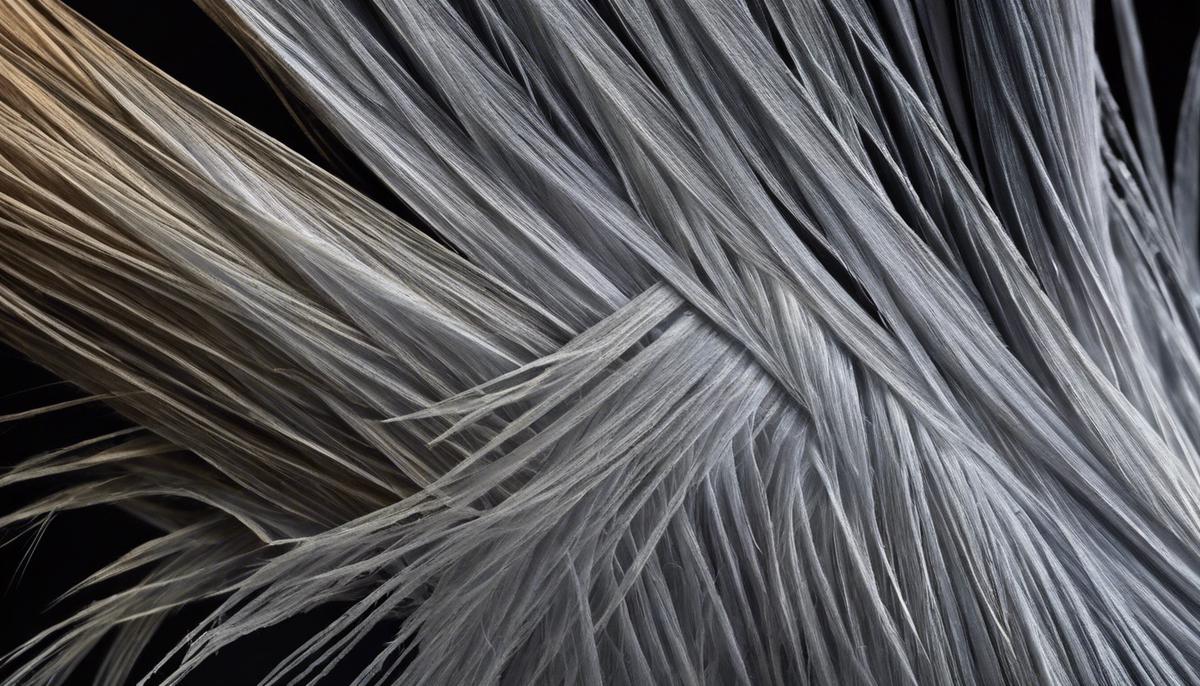
Asbestos, a term commonly used for a group of silicate minerals characterized by their fibrous structure, poses a unique enigma when considering its interaction with human touch. The intricate lattice of its fibrous composition grants asbestos several physical characteristics that are consequential when in contact with skin. A primary feature of these fibers is their microscopic scale, which allows them to interact with the epidermal layers in a manner that is not perceived as immediately abrasive to the touch. Indeed, in its undisturbed state, asbestos can feel deceptively soft and cloth-like, a property that historically led to its use in textiles.
Moreover, upon closer examination of asbestos fibers, one discovers a distinct dichotomy: the same fibrous formation that can feel innocuously smooth can, under certain conditions, disrupt the dermal integrity. The minuscule, needle-like fibers have the potential to become lodged in the upper layers of the skin, causing irritation or more severe abrasive injuries. Additionally, due to their small size and sharp nature, these fibers can insidiously penetrate beyond the skin’s surface without a pronounced immediate sensation, thereby facilitating unnoticed entry into the body’s internal systems with all associated health risks.
It is precisely this dualism—the coexistence of silky texture and penetrative potential—that defines the tactile interaction with asbestos. Moreover, because the human nervous system typically signals potential danger through the sensation of pain or discomfort, asbestos’ stealth at the epidermal level defies such protective mechanisms. Consequently, engaging with materials containing asbestos fibers requires considerable caution, ensuring minimal direct contact to prevent the corresponding dermal and systemic health hazards.
Skin Sensation on Contact with Asbestos
When asbestos comes into contact with human skin, the initial tactile perception does not typically elicit alarm.
This is due to the fact that individual asbestos fibers are incredibly fine—so fine, in fact, that they can often go unnoticed by the bare touch.
Their minuscule diameter allows them to adhere to or become embedded within the superficial layers of the skin without an immediate sense of intrusion.
Because these particles are not perceived as abrasive to the touch at first encounter, they may be deceptively regarded as harmless.
However, one must understand the deceptive nature of this tactile interaction.
Due to the microscopic scale and physical properties of asbestos fibers, they can readily cling to or become ingrained in the crevices of the skin.
Such interaction is particularly concerning because inadvertent hand-to-mouth or hand-to-eye actions may facilitate the transfer of fibers to mucous membranes or the respiratory system, posing far greater risks.
One should not rely solely on sensory feedback when assessing the potential dangers of asbestos.
Protective measures such as gloves and appropriate protective clothing are essential to minimize any direct dermal interaction with asbestos-containing materials.
Whenever exposure to asbestos materials is unavoidable, strict adherence to safety protocols is paramount.

Health Implications of Asbestos on Skin
Exposure to asbestos carries significant health risks, including potential impacts on the skin, which are of profound concern to those in fields of public health and occupational safety.
When asbestos fibers come into contact with the skin, one may be at risk of developing asbestos warts or keratoses. These skin conditions arise when the sharp fibers lodge themselves in skin wounds.
The immune system’s reaction encapsulates the foreign body in thickened layers of skin cells, ultimately leading to callous-like growths which can be uncomfortable, though are typically benign in nature. However, their presence is indicative of asbestos exposure, suggesting an elevated risk for more severe health issues.
Beyond the superficial interactions, the insidious nature of asbestos extends to its potential to contribute to malignant skin conditions. The prolonged skin contact with asbestos-contaminated materials, particularly for workers in industries such as construction or shipbuilding, may result in rare but serious forms of skin cancer, such as malignant mesothelioma.
This form of cancer, while more commonly associated with the lining of the lungs, can originate from the skin’s mesothelial cells under the dire circumstances of persistent, unabated exposure to asbestos fibers.
Admittedly, the latency period before the onset of asbestos-related skin conditions can be rather extensive, often spanning decades. This dormant interlude further complicates the attribution of these health effects to asbestos exposure, underlining the critical importance of prevention.
Hence, diligent use of personal protective equipment, such as gloves and long-sleeved clothing, is imperative for anyone who might come into contact with materials suspected of containing asbestos.
For those occupational roles regularly confronting this hazard, ongoing health surveillance is advised to ensure early detection of any adverse dermal or systemic manifestations as a result of contact with asbestos.

Preventive Measures and Safety
In mitigating the risks of dermal exposure to asbestos fibers, the implementation of effective safety protocols is paramount. Foremost among these is the comprehensive deployment of Personal Protective Equipment (PPE). Particularly, impermeable gloves and long-sleeved garments should be donned by all personnel to minimize skin contact. It is imperative that this protective clothing be composed of materials which do not themselves react with asbestos, or allow for the fibers to become affixed to the fabric. This proactive barrier significantly reduces the transfer of asbestos fibers onto the skin, thereby decreasing the likelihood of asbestos-related skin conditions, inclusive of the formation of benign growths such as asbestos warts and keratoses.
The establishment of decontamination zones is also integral to the safety regime. These zones serve the dual function of facilitating the safe removal of PPE and ensuring that asbestos fibers are not transported beyond the confines of the work area, reducing the risk of secondary exposure. Adhering to meticulous decontamination procedures, inclusive of thorough washing of exposed skin with proper cleansing agents, is essential to remove any fibers that may have bypassed the protective clothing. To augment the efficacy of these measures, regular training and refreshers on proper PPE usage and decontamination procedures are necessary for all individuals who might come into contact with asbestos-containing materials. It is through diligent application of such measures that the risks posed by asbestos to the epidermal layer can be effectively curtailed.
Furthermore, the exclusion of all unnecessary personnel from areas where asbestos is present is a critical component of safety protocols. It is equally essential to ensure that any asbestos containment or abatement work is conducted in strict accordance with regulatory safety standards, thereby safeguarding both the operatives directly involved and the wider population from inadvertent exposure. Continuous air monitoring, in conjunction with these safety protocols, acts as an indispensable tool for early detection of asbestos fibers in the environment, thus enabling rapid response to prevent skin exposure. Coupled with ongoing health surveillance of at-risk workers, these comprehensive measures embody the fulcrum of prevention in the effort to eradicate asbestos-induced pathologies.

The delicate interplay between our epidermis and the silken yet threatening caress of asbestos fibers calls for an unwavering commitment to vigilance and protection. Throughout this exploration, we have unveiled the subtle cues our skin provides when in the presence of asbestos and illuminated the critical measures that must be implemented to shield ourselves from its insidious touch. Armed with knowledge of personal protective equipment, environmental controls, and stringent safety guidelines, we stand better equipped to navigate the spaces where asbestos lurks, preserving the integrity of our health and fortifying our defense against the unseen dangers that may cling to the very surface we trust to protect us.