
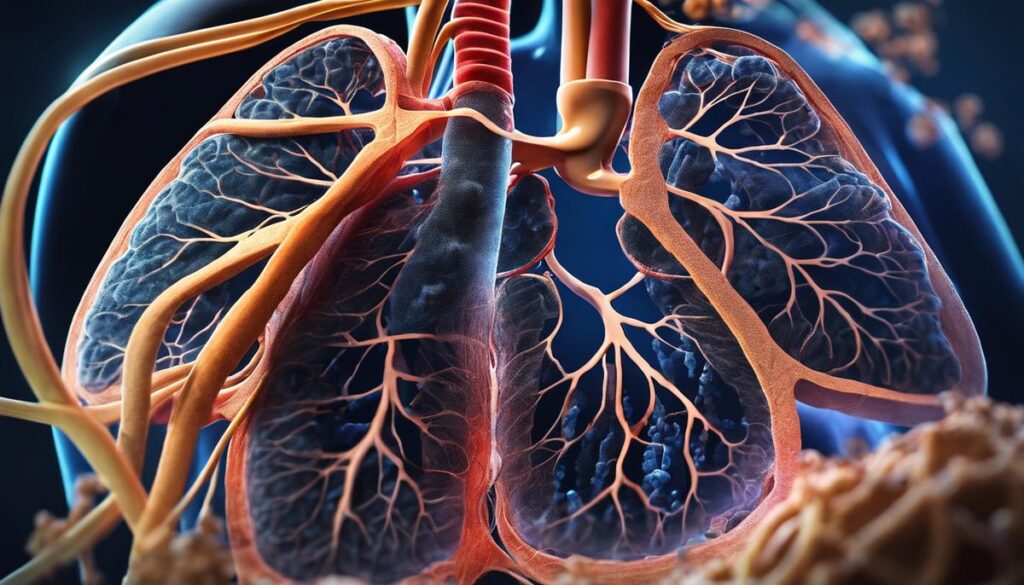
The interplay between human health and environmental exposure to hazardous agents remains an area of pressing concern, and among these agents, asbestos stands out for its insidious and persistent threat. As the understanding of asbestos exposure and its dire consequences deepens, so does the impetus to delve into the minutiae of its pathophysiological impact. By tracing the journey of asbestos fibers from the moment they are inhaled to the complex inflammatory and fibrotic responses they invoke, we begin to comprehend the true magnitude of their effect on the human body. This essay meticulously examines not only the cellular and molecular interactions leading to debilitating diseases such as asbestosis, mesothelioma, and lung cancer but also the broader epidemiological trends that shape public health policies, the regulatory frameworks designed to safeguard our well-being, and the cutting-edge treatments offering hope for those afflicted.
The Pathophysiology of Asbestos Exposure
The Physiological Impact of Asbestos on the Human Body
Asbestos, a term referring to a group of minerals composed of microscopic fibers, was once hailed for its versatility and resistance to heat, electricity, and chemical damage. However, it was discovered that prolonged exposure to these fibers can lead to severe health complications. Understanding how asbestos affects human physiology requires an examination of its interaction with the body’s systems upon inhalation or ingestion.
When asbestos fibers enter the body through the respiratory or digestive systems, they interact with delicate internal tissues. Due to their size and shape, these fibers can become lodged in the mesothelium, a protective lining that covers the lungs, abdominal cavity, and heart. The body’s natural defenses, which typically remove foreign particles, struggle to break down these persistent fibers.
Over time, the presence of asbestos in the mesothelial tissue can cause inflammation and cellular damage. Such damage is the precursor to a range of respiratory conditions. Of these, asbestosis is a noteworthy mention. Characterized by fibrous scar tissue in the lungs, asbestosis impairs breathing by inhibiting lung expansion and oxygen exchange. Patients with asbestosis often experience symptoms such as persistent coughing and shortness of breath.
Additionally, asbestos poses a carcinogenic risk, most notably in the form of mesothelioma—a rare, aggressive cancer that primarily affects the lining of the lungs, although it can also target other mesothelium layers. Mesothelioma’s latency period, which denotes the time from asbestos exposure to disease onset, can span several decades, making early detection challenging.
Lung cancer is another significant health hazard associated with asbestos exposure, marked by a malignant growth of tissue within lung structures. The risk of lung cancer rises with cumulative exposure to asbestos and is exacerbated by other factors, such as smoking.
The interplay between asbestos fibers and cellular structures extends beyond respiratory illnesses. Studies indicate that asbestos can induce chronic inflammation, triggering a cascade of cellular responses that may culminate in mutagenesis and tumor development. Moreover, the body’s continual endeavor to rid itself of asbestos fibers can result in an immune system compromise, leaving individuals more susceptible to other health issues.
It is undeniable that asbestos poses a serious threat to human health, impacting physiology through mechanisms that can lead to life-threatening conditions. Accordingly, substantial efforts have been made to reduce asbestos exposure and to develop stringent regulations surrounding its handling. Through ongoing research and improved safety practices, protecting human health from the insidious effects of asbestos remains a primary objective within public health and occupational safety disciplines.

Epidemiology of Asbestos-Related Diseases
The global impact of asbestos-related diseases is profound, affecting numerous individuals and communities worldwide. Asbestos fibers, once widely used for their durability and heat-resistant properties, have left a legacy of health concerns that continue to surface due to extended latency periods.
The economic ramifications are vast. Medical costs for treating asbestos-related diseases are significant, often involving specialized care and long-term treatment plans. In many countries, the healthcare burden translates into substantial expenditures for both public and private sectors. Additionally, there is the cost of litigation and compensation for those affected, which in some industrialized nations, amounts to billions of dollars.
Occupational asbestos exposure in industries such as construction, shipbuilding, and manufacturing has historically been the primary cause of asbestos-related diseases, with a disproportionate effect on blue-collar workers. However, secondary exposure, affecting families of these workers through asbestos dust brought home on clothing, has expanded the demographic of those impacted.
Environmental exposure is another concerning aspect, particularly in regions where asbestos mining occurred or where natural disasters have disturbed existing asbestos-containing materials. The environmental persistence of asbestos means that legacy exposures continue to pose risks to current and future populations.
As global awareness of the risks has increased, countries around the globe have taken steps to ban or restrict the use of asbestos. Nonetheless, the legacy of past use continues to affect the health of individuals long after initial exposure. Developing countries, in particular, may still face challenges with enforcement of regulations and the safe removal of existing asbestos, sometimes lacking the infrastructure necessary to manage and mitigate these risks effectively.
Public health initiatives focus on preventative measures, including raising awareness and educating the workforce on safe handling practices. Global collaboration is also pivotal in research aimed at finding effective treatments and improving diagnostic methods for early detection of asbestos-related diseases.
Overall, the global impact is a tapestry of public health concerns, financial costs, and challenges related to the legacy of asbestos use. It is a reminder of the long-reaching effects of industrial and environmental health hazards, guiding present-day practices and policies toward a safer and more informed future.

Risk Assessment and Asbestos Exposure Limits
The Regulatory Framework: Established Exposure Limits for Asbestos
Asbestos, once hailed for its fire-resistant properties, has since been recognized as a significant health hazard, necessitating stringent regulatory oversight for the protection of public health. This discourse examines the established exposure limits for asbestos, serving as a critical tool to safeguard individuals from the pernicious effects of asbestos-related diseases.
When exploring the topic of exposure limits, one cannot overlook the vital role of occupational safety and health administrations globally. These bodies have the fundamental responsibility to determine and enforce the permissible exposure limits (PELs) for airborne contaminants, including asbestos. In the United States, for example, the Occupational Safety and Health Administration (OSHA) has set the PEL for asbestos at 0.1 fibers per cubic centimeter (f/cc) of air, averaged over an 8-hour workday.
The National Institute for Occupational Safety and Health (NIOSH), another significant entity contributing to worker protection, recommends an even lower exposure limit. Its recommended exposure limit (REL) for asbestos is 0.1 f/cc as a time-weighted average for up to a 10-hour workday during a 40-hour workweek. This conservative approach is taken to further ensure the health and safety of workers.
Apart from occupational settings, the Environmental Protection Agency (EPA) in the United States plays a pivotal role. The EPA regulates asbestos contamination in schools under the Asbestos Hazard Emergency Response Act (AHERA) and also sets regulations for building demolition and renovation under the National Emission Standards for Hazardous Air Pollutants (NESHAP). The EPA’s Clean Air Act limits the amount of asbestos that can be released into the air to minimize the risk of public exposure.
It is instrumental to acknowledge that various countries may have different exposure limits based on their national legislation and guidelines. For example, in the European Union, Directive 2009/148/EC dictates asbestos exposure limits, which are often more stringent than those in other parts of the world. Additionally, in some countries, the complete ban on asbestos eliminates the need for occupational exposure limits, although enforcement and legacy issues persist.
Adherence to these established limits is of paramount importance, and it is bolstered by a series of protective measures, including engineering controls, work practice standards, and personal protective equipment. When asbestos levels cannot be managed to comply with the PEL, respiratory protection is required. The type of respirator employed depends on the airborne concentration of asbestos; half-mask respirators may be adequate for lower levels of asbestos, while full-facepiece respirators or powered air-purifying respirators are mandated for higher concentrations.
Continuous monitoring of the air for asbestos fibers in high-risk environments, along with regular health screenings and robust education about safe-handling practices, form the cornerstone of effective asbestos risk management. These measures, if meticulously implemented, serve to minimize the potential inhalation of asbestos fibers, thereby thwarting the onset of grave health conditions associated with asbestos exposure.
It is essential to recognize that even with established exposure limits in place, the only way to fully eradicate asbestos-related diseases is through the cessation of asbestos use and the scrupulous management of existing asbestos-containing materials. Research into asbestos continues unabated, seeking to illuminate every facet of its impact on health and foster the evolution of regulatory measures to ensure the protection of human life.

Photo by louishansel on Unsplash
Asbestos Abatement and Control Strategies
Mitigation of Asbestos Risks: Effective Intervention Strategies
Effective mitigation of asbestos risks in contaminated environments necessitates a multi-faceted approach that integrates rigorous safety protocols, regular risk assessments, and comprehensive abatement methodologies. Due to the well-documented health hazards, it has become imperative that environments contaminated with asbestos are handled with meticulous care to prevent the release of fibers into the air, which can have detrimental long-term health consequences.
Identification and Risk Assessment
The foundational step in mitigating asbestos exposure involves accurately identifying the presence of asbestos-containing materials (ACMs) in any given environment. This is achieved through visual inspections and laboratory analysis of suspect materials. Once identified, a detailed risk assessment should be carried out to evaluate the condition of the ACMs and the potential for fiber release.
Abatement Procedures
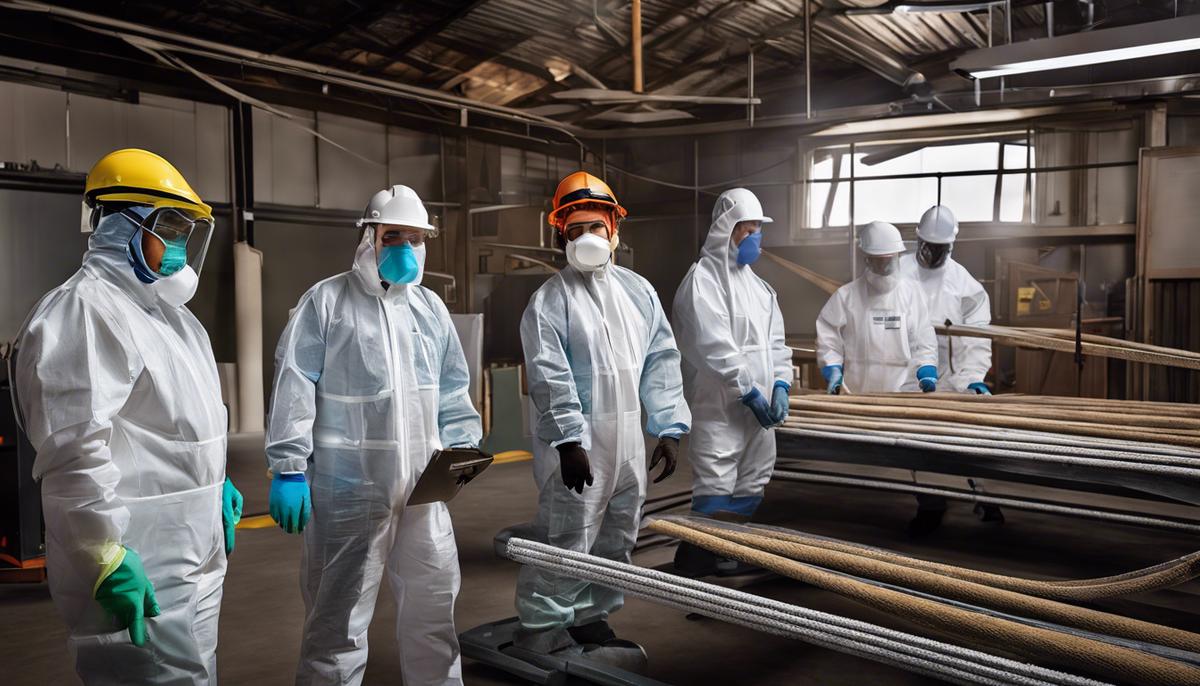
There are two main procedures for asbestos abatement: encapsulation and removal. Encapsulation refers to the process of sealing ACMs in a protective coating that prevents fiber release. When encapsulation is not viable, complete removal of ACMs under controlled conditions is necessary. This process should only be performed by certified professionals equipped with state-of-the-art protective gear, including respirators and disposable coveralls, to prevent any environmental contamination or personal exposure.
Engineering Controls
To reduce the risk of asbestos exposure, engineering controls such as isolation of contaminated areas and implementation of negative-pressure systems are crucial. Such measures prevent the spread of fibers by containing and extracting airborne particles effectively.
Decontamination and Disposal
Post-abatement, strict decontamination protocols for equipment, materials, and personnel are crucial. The safe packaging and disposal of asbestos waste at designated disposal sites is equally paramount to prevent secondary contamination.
Emergency Response and Natural Disaster Considerations
In addition to regular remediation scenarios, emergency preparedness for natural disasters that could potentially disturb ACMs is essential. Emergency response protocols should include rapid containment and air quality monitoring to mitigate risks in the aftermath of events that disrupt building integrity.
Worker Safety and Training
The safety of workers involved in asbestos mitigation is of the utmost priority. Extensive training on handling ACMs, proper usage of personal protective equipment, and adherence to legal safety requirements should be mandatory. Regular medical surveillance is recommended to monitor the health of individuals who routinely encounter asbestos in their line of work.
Legal and Environmental Compliance
Environments housing asbestos must comply with stringent federal and state regulations that govern asbestos management. Regular audits by experienced environmental consultants ensure adherence to these legal standards, thereby minimizing the risks of non-compliance and health hazards.
Community Education and Awareness Programs
Public education campaigns can significantly enhance community knowledge of asbestos risks and proper response strategies. Information dissemination through local health departments and community workshops helps elevate public understanding and vigilance concerning asbestos contamination.
Closing Remarks
Mitigating asbestos risks in contaminated environments calls for an intricate balance between human safety and environmental protection. By invoking robust abatement strategies, prioritizing health and safety training, and adhering to regulatory mandates, we can significantly diminish the hazards presented by asbestos. Proactive surveillance, coupled with community-wide education efforts, ensure that our approach to managing asbestos risks is sustainable, socially responsible, and aligned with the overarching goal of preserving public health.
Advancements in Asbestos Disease Treatment
Therapeutic Strategies for Asbestos-Related Diseases: Progress and Prospects
The escalation in understanding of asbestos-related diseases has markedly accelerated research into their treatment. The recognition that asbestos exposure leads to a constellation of health conditions, notably mesothelioma, lung cancer, and asbestosis, has engendered a strategic confluence of medical, scientific, and technological disciplines. This union seeks to find actionable treatments to not only manage but also to reverse the pathological sequelae of asbestos fiber exposure.
Currently at the forefront is the field of targeted therapy. This approach involves drugs designed to attack specific cancer cell markers sparing most normal cells. Mesothelioma, for instance, benefits from ongoing research into biomarkers that could be potential targets. One such promise lies within what are termed as immunotoxins: synthesized proteins that marry a cancer cell identifier with a cell-killing agent. In theory, when administered, these immunotoxins seek out and destroy mesothelioma cells specifically, reducing impact on healthier tissues.
Another promising avenue is immunotherapy, which bolsters the body’s natural defenses to fight the cancer. Clinical trials are surfacing with increasing regularity, evaluating agents such as checkpoint inhibitors. These substances unshackle immune cells that might otherwise be restrained by cancer’s clever molecular defenses, thus allowing a now-empowered immune system to mount a robust offense against malignancy.
Gene therapy represents an avant-garde frontier in this battle. While still predominantly in the experimental phase, the idea of correcting the genes that cause cancerous growths or modifying a patient’s own immune cells to better recognize and combat tumors is inching towards clinical reality. Therapy using CRISPR-Cas9 for gene editing is one of the most exciting developments in this area, with the potential to snip out harmful mutations or insert beneficial genes.
Pulmonary rehabilitation programs, while not novel, have become increasingly sophisticated and tailored to individuals suffering from asbestosis and associated respiratory conditions. These interventions offer patients structured exercise, education, and support, aiding in managing symptoms and improving quality of life.
Furthermore, palliative care has received renewed focus, with an understanding that improving the quality of life for those with advanced disease is just as crucial as extending it. Management of pain, breathlessness, and psychological support feature prominently, with multidisciplinary teams working closely to address these complex needs.
In the broader perspective, the role of artificial intelligence (AI) in early detection through imaging analysis cannot be understated. AI algorithms are being trained to identify patterns associated with mesothelioma and lung cancer in CT scans and X-rays well before the human eye can discern them. This advancement can lead to earlier diagnosis and consequently better prognoses, which is significant given the lengthy latency period of asbestos-related diseases.
The landscape of treatment for asbestos-related disease is in continual evolution, benefiting from cross-pollination of insights and techniques from diverse scientific spheres. As molecular understanding deepens and computational capabilities advance, it fosters a cautious optimism that future strategies will render these formidable diseases not only treatable but, ultimately, preventable. This requires ongoing investment, innovation, and an unwavering commitment to patients living with the aftermath of asbestos exposure, ensuring that the legacy of asbestos is not marked by morbidity but by the triumph of human ingenuity over disease.

Photo by jessedo81 on Unsplash
As we consider the multifaceted aspects of asbestos exposure—from pathophysiological mechanisms to epidemiological impacts, regulatory frameworks to abatement strategies, and advancements in treatment—the collective knowledge underscores a pivotal truth: vigilance and proactive measures are paramount to mitigate health risks. This comprehensive overview encapsulates the sheer complexity of managing asbestos within our environments, stressing the necessity for informed decision-making and continuous innovation in both policy and medical intervention. In harnessing such interdisciplinary insights, stakeholders and communities can forge pathways to safer environments and improved outcomes for individuals grappling with the dire consequences of asbestos exposure.